UTENSILS FOR THE TEA CEREMONY
Chawan, Chasen, Chashaku & Matcha Accessories from Japan at Kasumiya
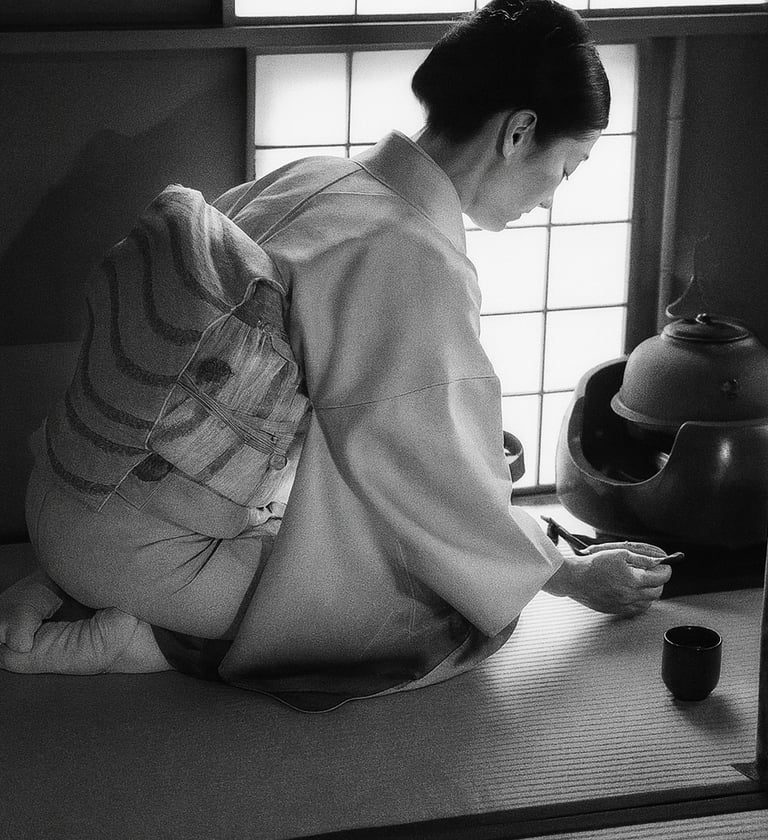
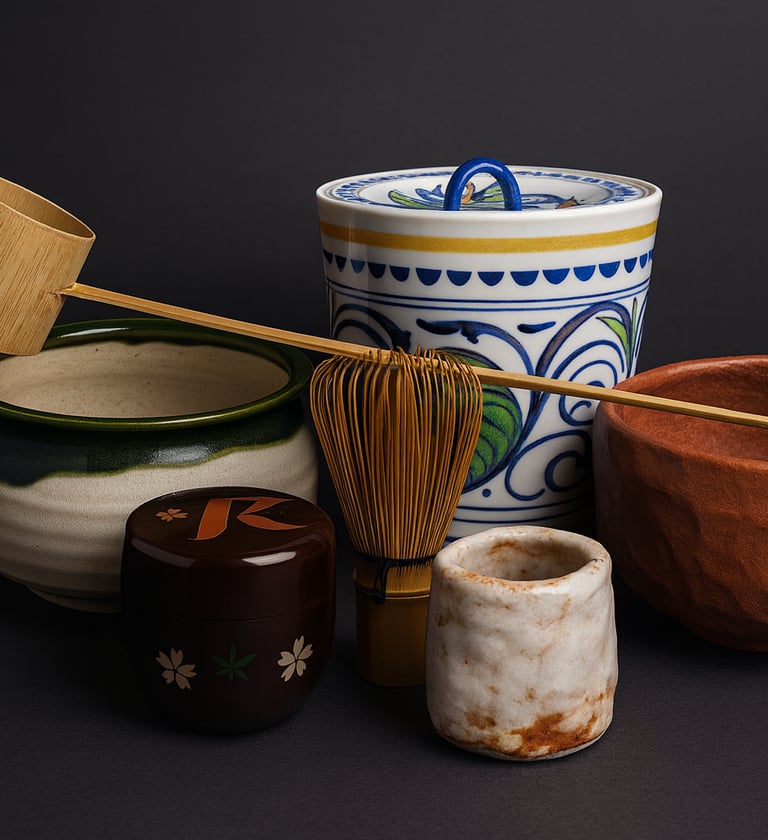
At Kasumiya you will find original utensils for the tea ceremony – many directly from Japan, some vintage or from the antique business of our family in Nagoya:
Chawan 茶碗 – handcrafted matcha bowls
Chasen 茶筅 – bamboo tea whisks for frothing
Chashaku 茶杓 – traditional matcha scoops
Natsume 棗 & Chaire 茶入 – tea caddies for matcha
Chakin & Fukusa – cloths for cleaning & ritual handling
Hishaku 柄杓 – bamboo water ladles
You can find our current tea ceremony and matcha utensils in our
eBay shop in the category “Tea Ceremony & Matcha Utensils”
(e.g. subcategories “Chawan & Bowls”, “Chasen & Chashaku”, “Tea Caddies & Cloths”).
What belongs to a tea ceremony set?
For a simple but complete matcha preparation in the Japanese style you usually need:
Chawan – the tea bowl in which the matcha is prepared and from which it is drunk
Chasen – the whisk used to beat matcha and water into a fine, creamy tea
Chashaku – the scoop used to measure the tea powder
Natsume or Chaire – the caddy in which matcha is kept ready for the ceremony
Chakin & Fukusa – cloths for cleaning the bowl and utensils
Hishaku – the water ladle used to scoop water from the kettle
In traditional schools, more utensils are added (e.g. kensui, kama, furo), but with these basics you are well equipped for home and many practice situations.
For whom are tea ceremony utensils suitable?
The utensils from Kasumiya are ideal for:
matcha lovers who want more than just powder in a shaker
people interested in the Japanese tea ceremony (Sadō/Chadō)
dōjōs, yoga and meditation spaces that want to create a harmonious tea corner
tea schools, tea masters & students looking for original pieces
everyone who appreciates mindful rituals, craftsmanship and Japanese aesthetics
Whether you are just starting with matcha or want to deepen your tea ceremony setup – the right selection of utensils makes a noticeable difference.
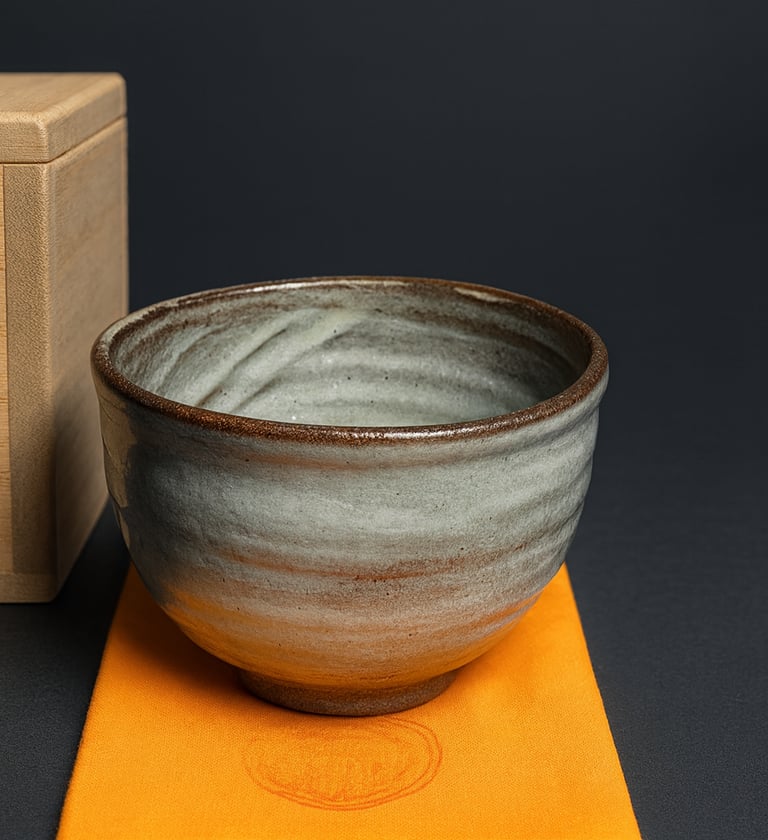
Chawan 茶碗 – matcha bowls with character
The chawan is much more than just a bowl:
It determines how you hold the tea in your hands – wide rim, warm walls, weight in your palms.
The inner shape influences how easily you can whisk matcha.
Glaze and surface determine how the bowl feels and how the tea appears inside it.
There are different shapes, for example:
deeper, more closed bowls – ideal for winter, keeping the tea warm longer
wider, flatter bowls – more for summer, the tea cools down a bit faster
rustic, intentionally “imperfect” glazes (wabi-sabi) and very smooth, elegant variants
What to look for?
bowl should sit comfortably in both hands
inner shape not too angular so matcha can be whisked easily
material: usually ceramics – denser, heavier or lighter depending on the style
At Kasumiya you will find handcrafted chawan from Japan, some signed, some vintage – each a one-of-a-kind piece with its own character.
Chasen 茶筅 – bamboo tea whisk for creamy matcha
The chasen is the tool that creates the texture of your matcha:
made from a single piece of bamboo, finely cut and split into tines
the number and shape of the tines influence the foam – finer tines = finer foam
There are:
standard chasen for usucha (thin matcha, the most commonly enjoyed style)
variants with more or fewer tines (e.g. 80, 100, 120), depending on school and preference
Use & tips:
soak briefly in warm water before use – this makes the tines more flexible
whisk matcha with a loose, quick “M” motion, not stirring like coffee
rinse with water only after use, no detergent
At Kasumiya you will find bamboo chasen from Japan, suitable for beginners and advanced practitioners.
Chashaku 茶杓 – bamboo matcha scoop
The chashaku is not only used for dosing – it is also part of the choreography:
carved from bamboo, with a curved tip to scoop the powder
depending on school, a little straighter or more curved, sometimes with a visible node
Function:
matcha is scooped with the chashaku from the natsume/chaire into the chawan
the number of “scoops” determines the amount – traditionally 2–3 scoops for usucha
What to look for?
smooth surface without splinters
pleasant length for both caddy and bowl
no cracks in the bamboo
At Kasumiya you get classic chashaku, some simple, some with their own distinctive shape – each piece handmade.
Natsume 棗 & Chaire 茶入 – tea caddies with style
Natsume and chaire keep matcha ready during the ceremony:
Natsume
usually made of wood with lacquer (urushi), round or slightly conical
often used for usucha (thin matcha)
the name “natsume” comes from the shape, reminiscent of a jujube fruit
Chaire
small caddy, usually ceramic or porcelain
traditionally placed in a fabric pouch (shifuku)
often used for koicha (thick matcha)
What to look for?
lid should close well but not stick
interior clean, dry and free of foreign smells
for lacquerware: surface without major scratches or chipping
Kasumiya offers original natsume and chaire, from simple to ornate, some vintage with visible history.
Chakin & Fukusa – inconspicuous but essential
Chakin 茶巾
cloth, usually linen or cotton
used for cleaning the chawan during the ceremony
folded to allow defined movements
Fukusa 袱紗
cloth, usually silk or fine fabric
used to ritually clean or “purify” natsume, chashaku & co.
colour and folding style can vary depending on school and role (host/guest)
What to look for?
chakin: absorbent, keeps its shape, easy to fold
fukusa: fine fabric, clean edges, pleasant in the hand
At Kasumiya you will find chakin and fukusa, some in traditional colours and handmade – ideal for the tea ceremony or as a stylish addition to your tea corner.
Hishaku 柄杓 – bamboo water ladle
The hishaku connects kettle, water basin and chawan:
classic water ladle with bamboo handle and round scoop
used to scoop hot water from the kettle (kama) and, if needed, cold water from the fresh water basin
the sound of the water while pouring is part of the atmosphere in the tearoom
What to look for?
cleanly finished bamboo, no sharp edges
handle and scoop firmly joined
length suited to your kettle/setup
At Kasumiya you can get traditional bamboo hishaku that complete your tea space both visually and functionally.
How can you recognise good quality in tea utensils?
In general:
materials: bamboo, ceramics, wood, lacquer and fabrics should feel high-quality, not cheap or “plastic-like”
craftsmanship: small irregularities are normal in handmade items – what matters is that form and function fit together
balance & feel: bowl rests well in the hand, chasen feels light and controllable, hishaku can be guided calmly
In detail:
chawan: no cracks, stable base, smooth rim
chasen: no broken or strongly bent tines when new
natsume/chaire: lid moves smoothly, not crooked or too loose
cloths: no large weaving defects, neatly finished edges
What should you consider when buying?
Ask yourself before buying:
What will you use the utensils for?
daily matcha at home
occasional tea ceremony with guests
practice as part of a tea school
starter set or focused collecting?
For a start, it’s enough to have: chawan + chasen + chashaku + one caddy
Later you can add natsume/chaire, fukusa, hishaku and additional bowls.
New, vintage or antique?
new pieces: usually robust for everyday use
vintage/antique: more character and history, but sometimes more delicate – perfect for collectors and enthusiasts
Care & storage – so your utensils last a long time
Chawan & ceramics
clean only with warm water, no harsh cleaners
let dry thoroughly, do not leave standing in water
do not put in dishwasher or microwave
Chasen & chashaku
rinse with clear water after use
let dry upright or on a chasen holder
do not soak for long periods, do not dry on a heater
Natsume & chaire
keep the inside always dry
store matcha for everyday use in its original packaging/tea tin, fill natsume/chaire for the ceremony
no aggressive cleaning agents, just wipe gently
Chakin & fukusa
wash chakin by hand or on a delicate cycle, depending on material
fukusa (especially silk) should be carefully aired and cleaned gently
Hishaku
dry after use, do not leave permanently in water
protect from direct sun and excessive heat (bamboo can crack)
What does Kasumiya specifically offer in the area of tea ceremony?
In the eBay shop of Kasumiya you will find – depending on current stock:
Chawan 茶碗 – handcrafted matcha bowls from various regions of Japan
Chasen 茶筅 – bamboo whisks suitable for usucha and everyday use
Chashaku 茶杓 – classic bamboo scoops, some hand-carved and signed
Natsume 棗 & Chaire 茶入 – original tea caddies, some with lacquerware, others as ceramic pieces
Chakin & Fukusa – cloths for cleaning and ritual handling
Hishaku 柄杓 – bamboo water ladles for a complete tea set
The Japanese tea ceremony – 茶道 (Sadō / Chadō) – is a path of mindfulness: heating the water, sifting the matcha, cleansing the bowl, whisking the tea, serving in silence.
Every movement is intentional – and every utensil is made to support these gestures.